One engine
The same Septr rules engine scans source archives and live responses, so the two studies can be compared without changing the detector.
We study source code and public deployments with one rules engine, publish the raw methodology, and separate harmless signals from credentials that can access data or spend money.
We probed publicly deployed applications across Vercel, Netlify, Cloudflare Pages, Lovable, and Replit. The study found real credentials in client-side JavaScript, where every visitor can retrieve them.
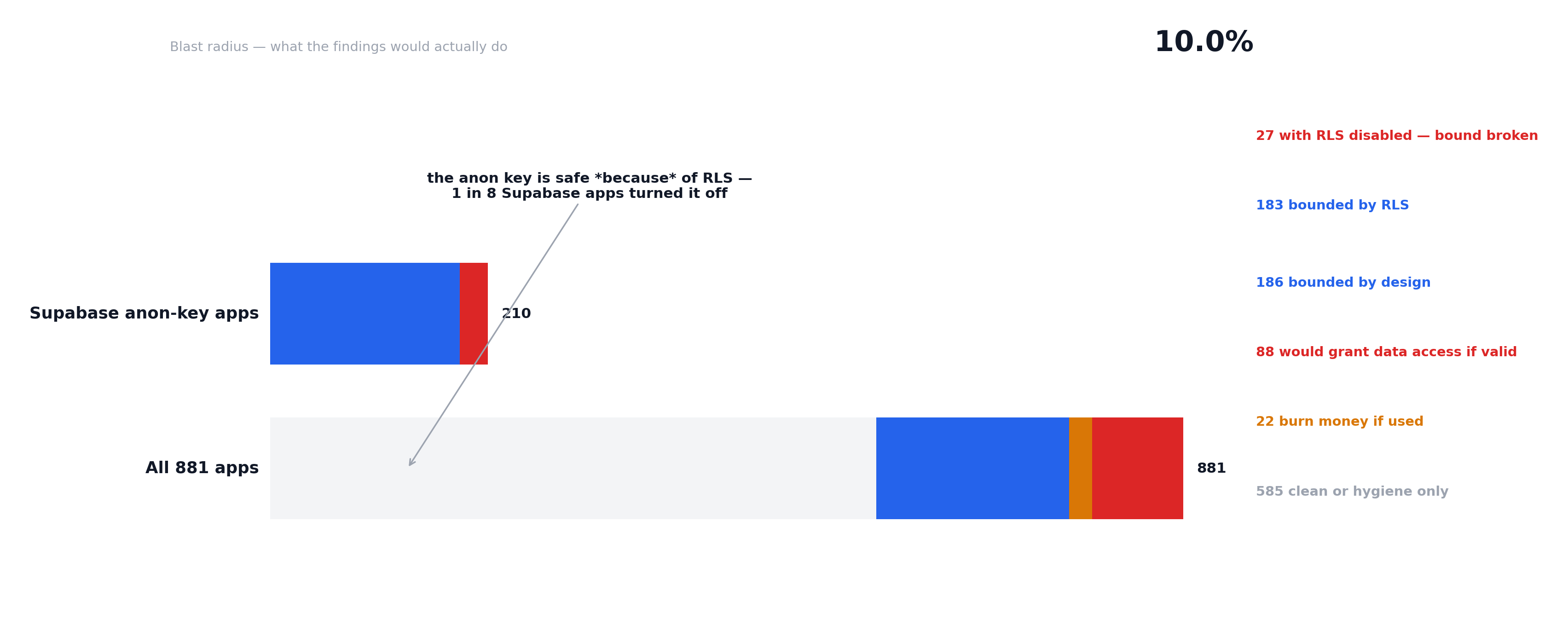
These charts are generated from the published, anonymized datasets. Read the full study for sampling, adjudication, confidence intervals, and limitations.
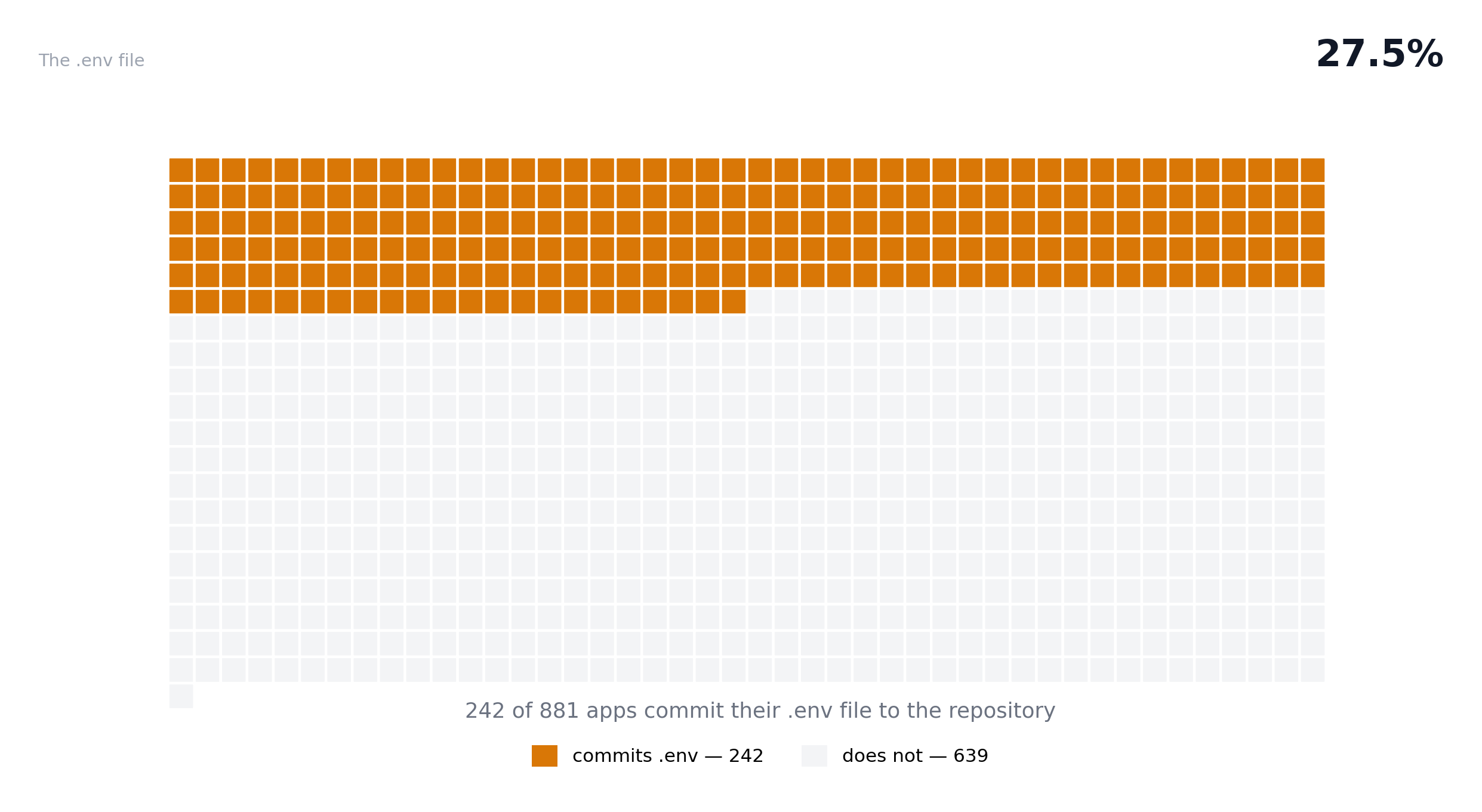
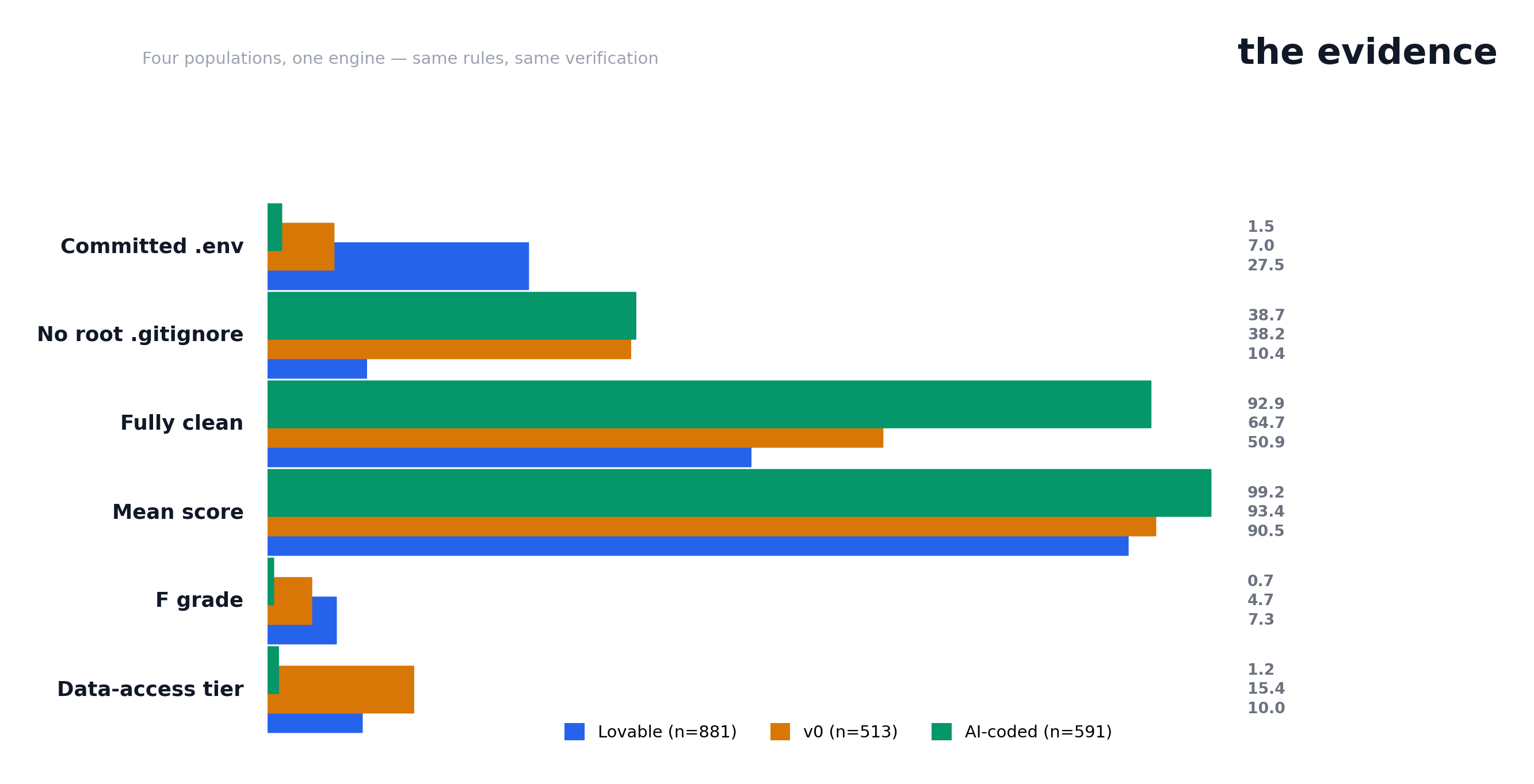
The same Septr rules engine scans source archives and live responses, so the two studies can be compared without changing the detector.
Findings were reviewed with surrounding code. Placeholder values and public-by-design keys are separated from real exposures.
We publish aggregates and anonymized rows only. No repo-to-credential mapping and no confirmed-live credential testing.